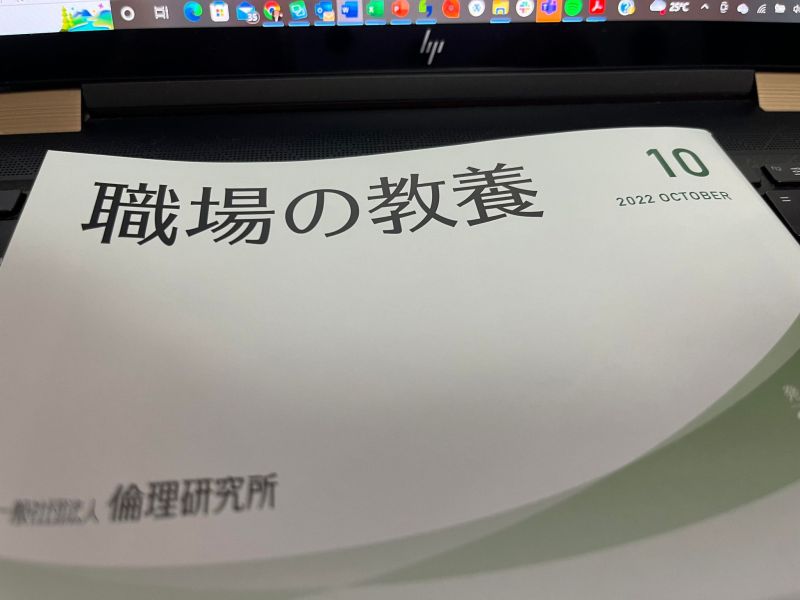
I occasionally use a shared office and got to go there for some paperwork yesterday. An elderly gentleman, whom I sometimes see there, gave me a thin booklet called 職場の教養, something like Workplace Culture or Lessons learned from Workplace. It includes a number of short journals that describe behavioral guidelines, good work relationships with colleagues; work productivity; addressing of mistakes or those similar themes, followed by one piece of little advice in each article. Honestly, they are not all practical or not what you feel like incorporating every time, as they often seem pushy, but I still find some of them interesting and a good reading. As a freelancer translator, I have lots of chance to get to know clients, peers, and to interact and produce something together with them but remotely in most cases, which is a different environment from what you are supposed to be put into when you work at a company, where you meet your colleagues and work together every day. So, an opportunity to remind myself of some lessons learned from workplace through the booklet gave me somewhat a fresh feeling…
Better early than late. We recently (and finally) updated our English website with more information. This accomplishment kept us motivated and we also managed to open a new website in German within a short time! Our main website is now in German. Collaterally, we also have websites in Japanese and English. We hope this momentum will enable us to reach a wider and more expansive client base 😊
Sprachgetriebe Consulting has just been initiated into DJW – Deutsch-Japanischer Wirtschaftskreis – 日独産業協会! Thank you for smoothly taking care of our membership application procedure. Our team is looking forward to a variety of opportunities of bridging and supporting businesses between Germany and Japan through our language/consultancy services.
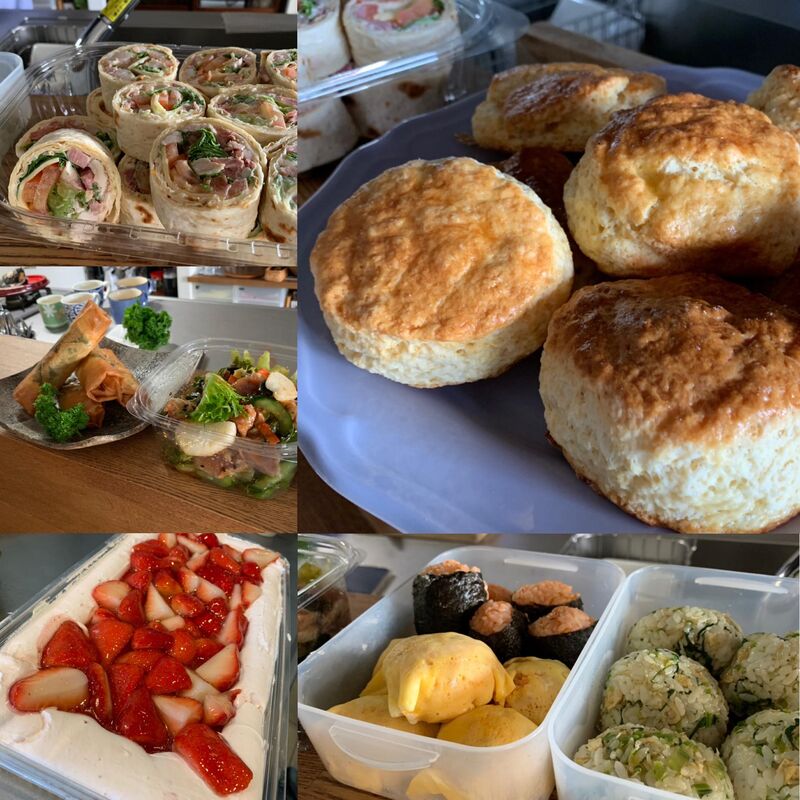
It has been more than ten years since I got to know my great friends and peers through an interpreting job for a business transition project in aerospace at a local manufacture. It was a project of just less than 4 months but 9 of us as an interpreter team got along with one another very well and we regularly meet up even after the project was over. Sometimes we hold a cozy potluck party and share our own recent news. We weren’t able to hold it F2F in 2021 due to the pandemic and did only a brief chitchat via Zoom. Fortunately, however, we managed this New Year’s F2F potluck party in 2022. It’s always nice to see them F2F and have a great time together, enjoying these exquisite dishes.
At the New Year meetups, we make a New Year’s resolution, always representing one Japanese character. My 2022 New Year’s resolution with one Japanese character is “動” Dō, or move. It’s gonna be a “busier” year with lots of things to do: translation businesses as usual, Japan Association of Translators (JAT) activities, and preparation for getting incorporated. But I’ll be actively moving around onsite from east to west, and here and there over social media, and enjoy all these challenges to come in 2022.
What’s your New Year’s resolution, or do you have anything you want to achieve this year? 🙂
2021 was very hectic throughout the year but somewhat productive as well. I already foresee a sequence of events and I’ll be even busier with translation businesses and JAT activities but I’m looking forward to challenges in 2022 🙂 belated happy new year.
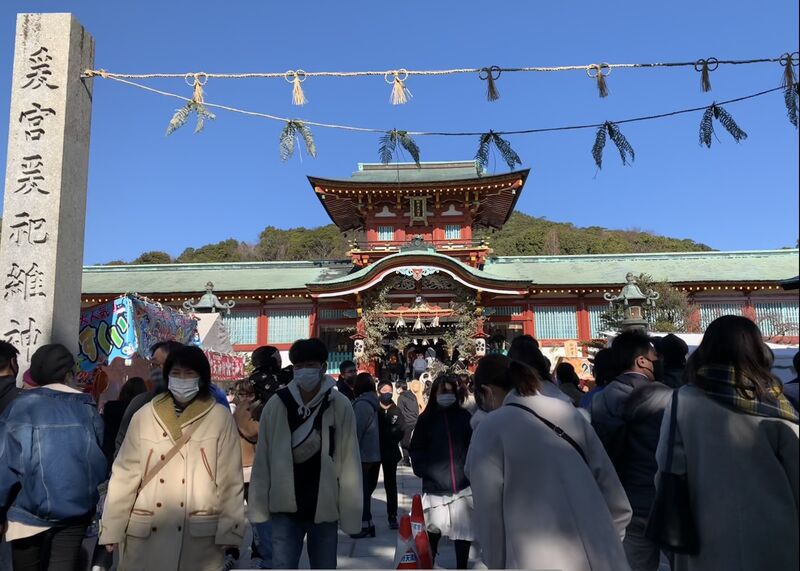
On one of the first three days of the New Year I visit the Hofu Tenmangu shrine to make New Year wishes. Though I refrained from visiting there last year, I made it yesterday as for 2022. Their vibrant atmosphere with throngs of visitors truly gives a good feeling. I wished for blessing of safety, and also successful studying, as Sugawara no Michizane, revered at the shrine, is the god of learning. I should study hard ୧(⑉•̀ㅁ•́⑉)૭✧
I became self-employed as a freelance translator in 2019, and prior to this, I had been translating on the side for 7 years. The encounter with the unprecedented pandemic of COVID-19 a year after I turned to full-time was unexpected and challenging, but thanks to the basis I had built with clients and partner agencies by then, the last two years weren’t that bad for me.
In the meantime, I have been wondering whether I should incorporate my business. In consideration of a nature of the job, however, you can complete a translation task alone. You may provide more extended services such as TEP (translation, editing and proofreading as a set), collaborating with peers through outsourcing so long as your clients agree, but that’s not a reason enough to become incorporated.
I operate a translation-agency-like business with my reliable, competent fellow translators as a team and provide translation/localization, editing, proofreading, TEP, transcreation, copywriting, interpreting, or (cultural) consultation according to clients’ needs. In this month, I had a chance to discuss with a prospective client for interesting translation projects in finance which is one of my fields of expertise, but it was put on hold as I am not incorporated. I quoted for a TEP service, but they didn’t want to accept the price. They differentiate rates for sole proprietors and the ones for incorporated entities, even if a service to be provided is the same regardless a form of business. We reached the conclusion that we’d re-open the discussion for collaboration if and when I become incorporated.
Until this happened, I had been satisfied with how my business were going but now I see myself being ambitious. Obviously, however, there are pros and cons of the incorporation:
Pros: – You can appropriate more extended variety of expenses to be included in your accounting records. – You will gain more flexibility and options to save tax. – You will gain wider access to clients who aren’t willing to do businesses with freelancers. – You will gain more credibility in terms of concluding contracts or financing. etc.
Cons: – Your income will be fixed. – The amount of fee and withdrawal of your social benefits will increase technically. – Corporate tax is inevitable even if your business goes into the red. – You will have more paperwork. etc.
Honestly, the insurance fee will most likely increase by 10 times or more (It’s my unique case) if I change the form of business. That’s the only issue that makes me hesitate. In spite of that, however, I think it is worth becoming incorporated to gain wider access to interesting projects in my fields of expertise (and interest). It’s just a matter of attributes of clients with whom you are going to do business.
Everyone has different objectives and circumstances. Do you choose to stay unincorporated or become incorporated?