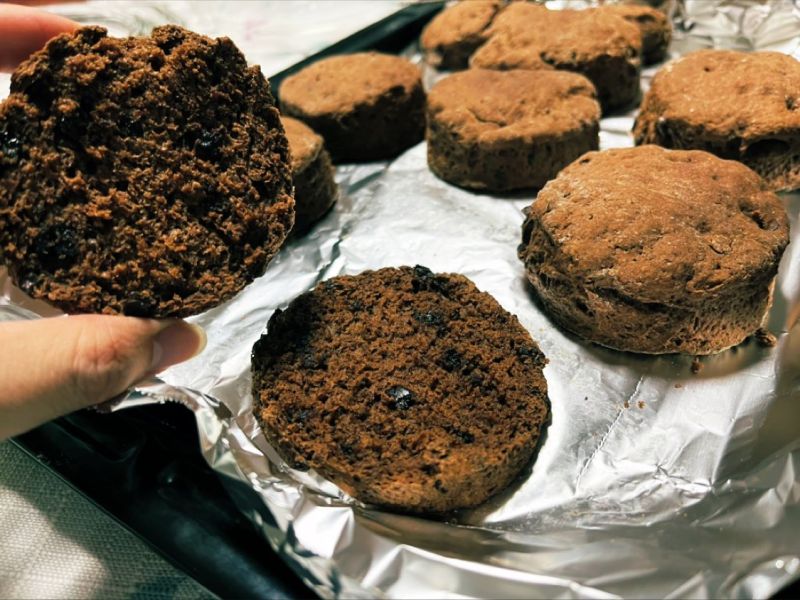
The live-streaming event “Takeshi’s Valentine’s chit chat with TMP members“ was successfully closed! 👏 Chit-chatting about translation businesses and my ideas while making scones was my first time and a very interesting try. (And I was relieved that I could bake and show well-baked scones at the end). I sensed many potentials in this kinda new-style talk show rather than just talking about translations and the businesses💡. I have been planning a cooking party, where peers can also enjoy networking with others, for 3 years since the pandemic. I’m sure it would be another interesting event like this time.🍽
I’ve got an interesting offer from Translation Marketing Project (TMP), where translator peers network and discuss work-life balance and marketing activities. I am going to talk on their YouTube live streaming (“Takeshi’s Valentine’s chit chat with TMP members”).
A TMP member in the disguise of a famous Kansai Comedian will bombard me with questions about translation businesses, and I answer them. Meanwhile, I also bake some sweets. This is the first time for me to take part in such an interesting event but I’ll do my best for successful baking (no, the main part is the talk).
I had an opportunity to give a talk at JTF Translation Fest last October and a part of its excerpt journal (1/2) has been published within JTF newsletter 📥 (in Japanese)! The other half (2/2) will be published next month.
On social media platforms, I’ve seen some negative outlook toward the translation industry from the standpoint of freelance translator but it still depends on how we act, how we do business, how we adapt ourselves to the state of art technologies and I’m therefore not pessimistic about my job, or it’s not a time to think pessimistic about it yet. With this in mind, I gave a talk of freelancing translation businesses and of chances spread out in front of us. Other than real-time tweets, I haven’t received feedback about the session but I hope my talk encouraged peers in some way and gave some hints for their own businesses.
Make new year resolutions related to translation businesses and look back on your great achievements with these hashtags, to keep up your motivation in the new year 🙂 👏 Especially with the latter hashtag, I wish colleagues all around the world a fulfilling, happy, prosperous New Year 2023 ♡(人>ω•*)ガンバロウウネ
In 2023, I’ll try looking for more opportunities to join in translation projects of: – fashion-brand related contents; – a business book (marketing, management, accounting etc.); – accounting related software/manual etc.; – LGBTQIA related contents; – Tourism in Germany; – Websites of consulting firms and their services
Tell me about a beloved snack in your city. Do you sometimes have them for break? Can you introduce and/or do you recommend it to people who visit your place? I can name several local snacks that I’d tell people to try but let me introduce one of them, which recently made me say “Wow.” 😋
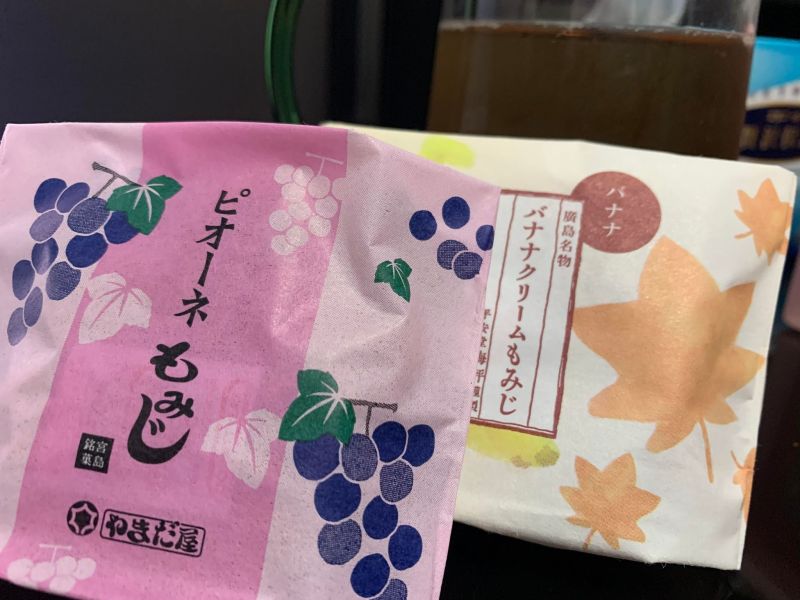
Hiroshima, where I live, has a maple leaf shaped cake called Momiji manju 🍁. It had used to have only one flavor, pasted beans in two different textures: mashed or smooth, then got 5 different assorts including custard cream, chocolate, matcha green tea flavors. The businesses extended to these 5 flavors sometime around 1984 which is my birth year actually. I wasn’t a fan of the snack, and it is said many local people don’t have them for nosh, but voila, now they have even more different kinds of flavors like yoghurt, strawberry milk, blueberry, lemon, pumpkin and more (now about 30 kinds as far as I know!). Many of the businesses that produce and sell Momiji manju cakes were founded between 1900 and 1970, so more than 50 years ago; and they are ever creating new flavors to entice customers to try! Their efforts of (flavor) diversification are inspiring.
The other day I happened to see a variety of them in a shop and found relatively new flavors: pione and banana cream and I liked both flavors very much. It’s not a bad idea to always have several pieces of the cakes ready for spontaneous afternoon tea… 😝
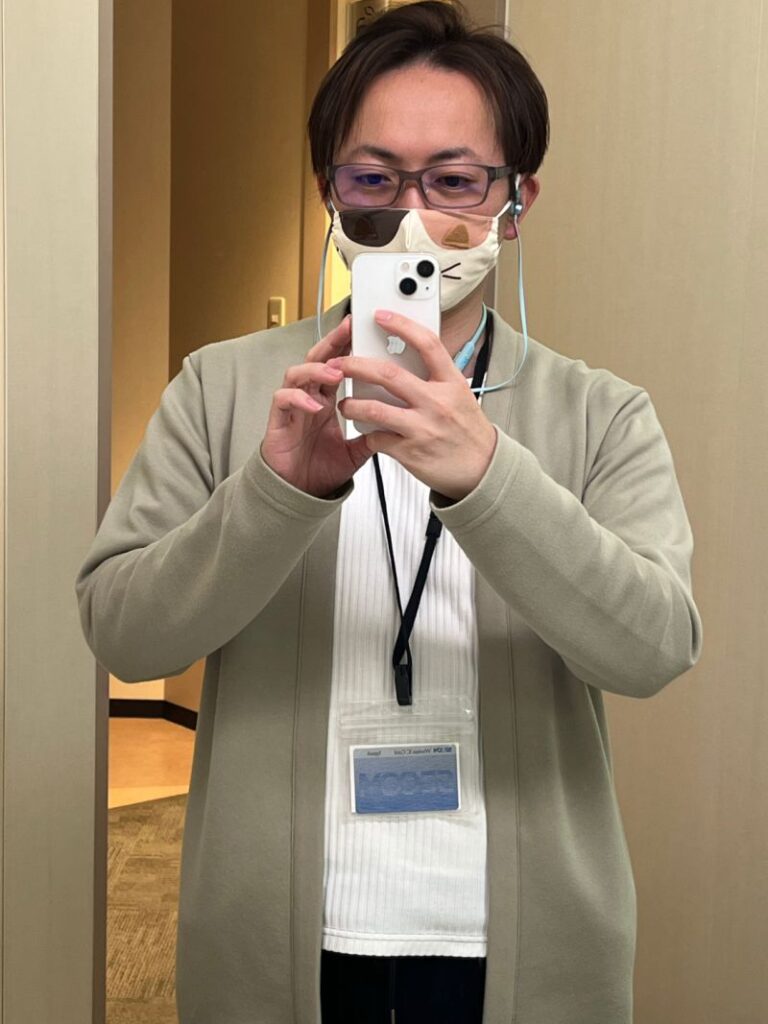
I’m not a fan of wearing a mask 😷 It’s apparently not comfortable to keep wearing it a whole day, I admit. Good, it’s now more optional to wear or take it off these days, when walking outside 🚶 and/or not talking, while still being courteous to others especially indoors. Nevertheless, I still wear it, otherwise take it off where it’s fine. Although it causes some stress on face, to have a little fun with wearing a mask even if only slightly, I sometimes wear… this kind of… a mask (see pictures) ฅ^•ω•^ฅ.
Putting aside the doubt if I have courage to wear those types of masks traveling in Europe for instance (these amusing masks may be widely/more accepted in Asia?), I find it interesting that these businesses go on well and now a wide variety of amusing masks can be found at shops. Getting into a niche (?) market like this through translation businesses would be interesting…😆
My vocabulary is largely based on living with my mother and grandmother. I know some words I use may sound a bit old. For example, I say “Tokkuri*” for high neck shirts 👚. I say “Mizuya” or “Shokkidana” for cupboards. (Now many Japanese people call these items in English reading: “Hainekku (high neck),” “Kappuboudo (cupboard)”). (*Tokkuri refers to Japanese ceramic sake bottles that have a narrow neck of jug and we used to call high neck shirts the same as its neck looks similar.)
Yesterday my mother told me what she experienced at an electronics store the other day. Mom: “Excuse me, where can I find ‘Denkimatto (electronic carpet)’?” Staff: “What is ‘Denkimatto’?” Mom: “Hmm, something we lay under a carpet” Staff: “Alright, you mean ‘Hotto Kaapetto (hot carpet)’!” Mom: “Yeah, that’s it (so, now people call it a hot carpet, I see)”
And you, Denkimatto!?
It shocked me a little but it was also funny. According to her, the staff member looked as old as me. There are possibly more words altering or that have just altered among people around my age.
I, as a linguist, always try remaining up to date and aware of new words but this conversation reminds me our everyday language shifts over time. 📚
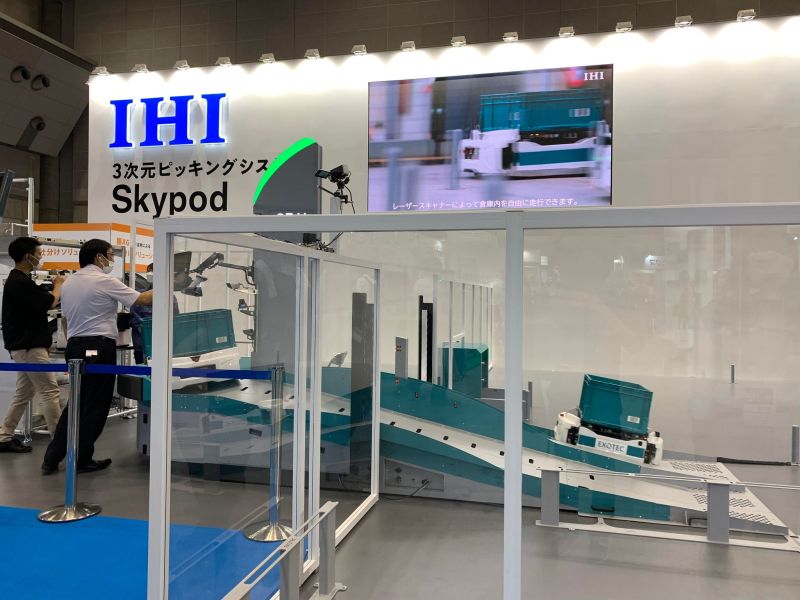
The phrase often heard: “it’s been two years and a half since the pandemic began.” Yes, it is long enough, and people are being prepared for or adapting themselves to the (emerging) post-pandemic era (I am not going to discuss here if it has come / when it will come etc.). At the same time, companies return or restart presenting their commodities at expos onsite. It must have been tough years, as many of them weren’t able to participate in onsite events and/or were forced to adjust (or tried to adjust) to operating under ever-changing COVID restrictions, moving from offline to online. Yet, you recognize enormous energies from people and impressive senses of reality at scale when you visit those events onsite. It’s always interesting to see and learn new products and solutions that go live in the markets. Expos are great places to catch up with those state-of-the-art technologies that you may get involved as a translator.
In mid-September, I visited some of those expos in Tokyo to explore potential business opportunities. Visiting those places and marketing yourselves however need good strategies. Expos are not places for individual marketing in the first place. Honestly, I went there only to learn I didn’t have those strategies with me, so it’s my homework for next occasions. On the other hand, I think I did well in the long run, getting to know some people and giving them my business cards. One of my current steady clients remembered and gave me a call one day, when they happened to need both interpreting and translation services for their customers. You give your business cards, you send messages, you get no responses, that’s fine, but you managed to cast “some seeds.”
COVID related travel restrictions have been lifted or are being lifted over the world. Japan also reopens to independent travelers (finally). I want to try these marketing activities overseas: in Singapore, in the States; or in Germany or elsewhere. We are approaching the last quarter of the year, and soon the year end is to come, so I am very much excited about planning for the next year 🙂
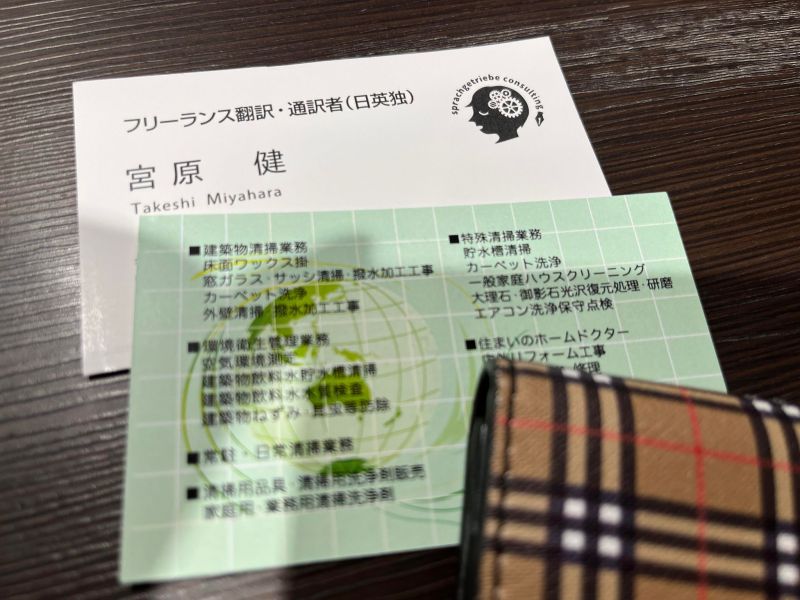
You have now Eight, Blinq, HiHello, Knowee and else. Digital business cards are handy, easy to make and available with a variety of fascinating templates. I’ve seem them in use at social networking events. I am not making fun of Japanese businesses in contrast but at expos in Japan, I saw a majority of visitors and presenters still depend on business cards in print. I brought mine with me, a simple one with my name, a business logo and contact details. It has no additional information. Maybe little boring.
Some of my colleagues have 2-3 different kinds of business cards and use either of them for different purposes. I didn’t find it necessary when I heard it for the first time but now I understand the point: memorable information depends on people and their needs. Those cards that include what you can do and/or what you are specialized in would be a good topic for (or would be easy to have an extended) conversation when you visit expos and meet people.
I’ve got some homework for next occasions to visit expos: make another design of business card for those self-marketing purposes.
Digital or in print: whichever it is, what kind of style/information does your business card include? And why?